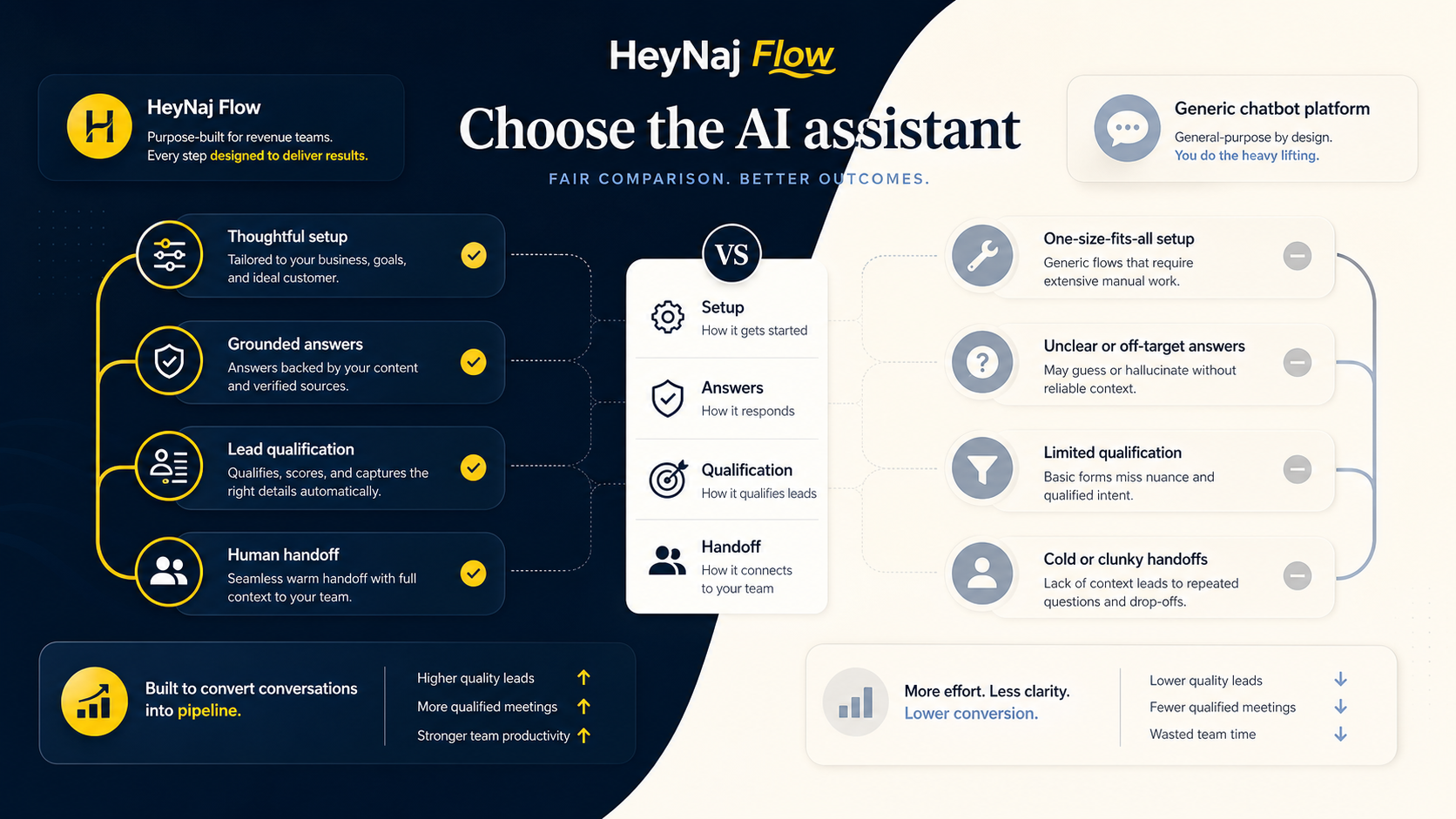
Choosing an AI assistant should start with the business workflow, not with the longest feature list or the most impressive demo.
The best assistant is not the one with the longest feature list. It is the one that fits the business?s real workflow, keeps answers grounded, and gives the team enough control to improve the experience over time.
Why fit matters more than feature count
The right platform should match the way a business handles knowledge, lead qualification, handoffs, maintenance, and follow-up. A smaller set of dependable capabilities can create more value than a broad but difficult-to-control toolkit.
The right assistant is the one that fits your workflow, grounds its answers, and makes human support easier,not merely the one with the longest feature list.
Compare the workflow, not just the interface
A useful comparison asks what happens before, during, and after a conversation. Look at knowledge maintenance, capture rules, qualification, handoff, and how the team reviews the results.
- Knowledge control: can the business keep answers aligned with its own documents?
- Conversation fit: can the assistant match the questions customers actually ask?
- Handoff quality: does a human receive useful context rather than a blank ticket?
- Ongoing upkeep: can the team improve the flow without rebuilding the whole site?
Understand the trade-offs
A broad platform may offer more options, while a focused workflow may be easier to govern and improve. The right choice depends on the business's priorities, team capacity, and customer journey.
Test one meaningful use case
Start with a real question or handoff problem. A small pilot reveals whether the assistant can produce grounded answers and useful next steps in the context that matters.
Choose the assistant your team can improve
Feature count is only one part of the decision. Dependable knowledge, a useful workflow, and manageable upkeep are stronger signs of long-term fit.