July 27, 2026 · 3 min read · chatbot cost savings customer service
How Chatbots Drive Significant Cost Savings in Customer Support
The strongest cost savings come from removing repetitive work while protecting the quality of the conversations that still need a human.
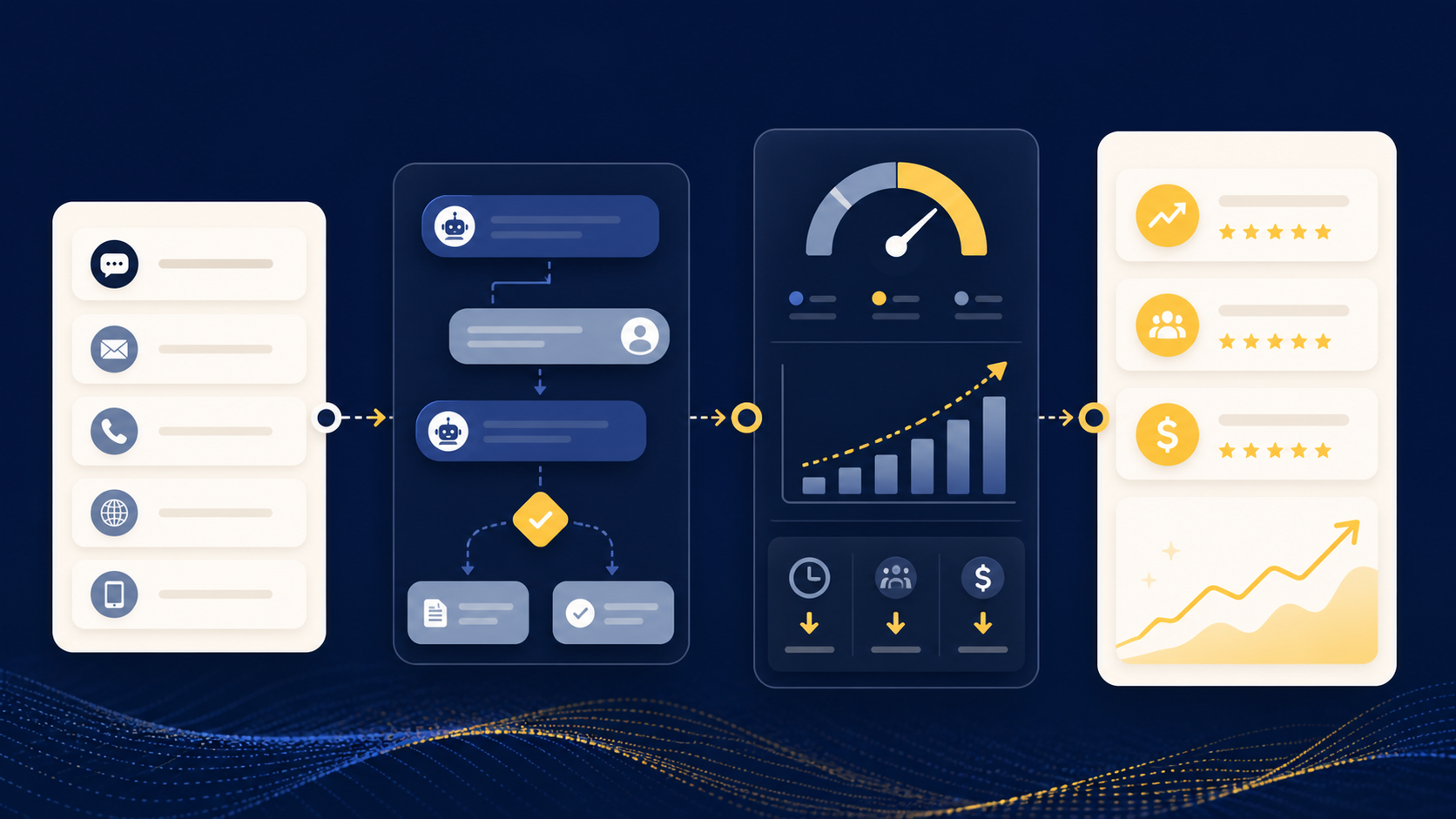
The practical cost case starts with the work your team repeats every day and the conversations that disappear before anyone can follow up.
Where savings actually come from
- Automate repeatable questions while keeping complex or sensitive cases human-led.
- Reduce the time teams spend repeating the same approved information.
- Use qualification to focus human attention on enquiries with real potential.
- Protect quality by reviewing unresolved questions and handoff outcomes regularly.
The strongest cost savings come from removing repetitive work while protecting the quality of the conversations that still need a human.
Cost savings come from removing avoidable effort while keeping service quality intact. A well-scoped chatbot can handle routine questions, collect useful context, and make human follow-up more efficient.
Where support savings come from
A focused assistant can answer approved questions, collect context, and route higher-value enquiries more clearly. That gives the team more time for complex cases without turning customer service into a dead end.
Cost savings matter only when the customer experience remains clear, helpful, and easy to escalate.
Find the repetitive work first
Cost savings begin with a clear view of what the team answers repeatedly. Questions about services, availability, process, and basic qualification are often good candidates for a grounded first flow.
- Automate the repeatable: use approved answers for common questions.
- Preserve the complex: route unusual, sensitive, or high-value cases to people.
- Carry context forward: reduce the time a human spends reconstructing the conversation.
Protect service quality while saving effort
A cheaper interaction is not a better interaction if it creates confusion. Keep the assistant narrow, current, and easy to correct when the answer is not enough.
Give the team better conversations
Lead summaries and clear intent signals help the team spend time where judgment matters. The value is not only fewer messages; it is better use of the messages that remain.
Save effort without making customers work harder
The right chatbot workflow removes avoidable work behind the scenes while giving customers a faster, clearer path forward.
Questions readers ask
Where do support savings usually come from?
They come from reducing repetitive answers and making human follow-up more efficient.
Will automation make support feel less personal?
Not when the scope is narrow, the tone is clear, and human escalation remains available.
What should the team review?
Review unanswered questions, incorrect answers, abandoned conversations, and the context passed to humans.
How do we avoid false savings?
Measure customer effort and service quality alongside time saved.
Want to apply this to your site? Start a free pilot conversation.
Sources
References
- accenture.com - AI in customer service: Benefits and top trends | Accenture
Chatbots can significantly reduce customer service costs by automating routine inquiries and improving agent efficiency.
- mckinsey.com - The future of customer service is now
Automation, including chatbots, offers substantial cost reduction in customer service operations.
- ibm.com - The future of chatbots: Customer service is now
Chatbots can lower operational costs by handling a large volume of customer interactions efficiently.